Effective ad hook formulas help your ads stand out. They use specific wording and structures to catch people’s eyes. Knowing these formulas can make your ads work much better.
The Power of a Great Ad Hook
Think about your own online experience. You see ads constantly. Most of them just blur together, right?
That’s because they lack a strong hook. A hook is that first spark. It’s what makes someone pause their thumb mid-scroll.
It’s the sentence, image, or question that says, “Hey, pay attention to me!”
Without a good hook, your ad message gets lost. Your great product or service might never get seen. Your marketing money goes to waste.
This is why understanding ad hook formulas is super important. It’s about making every second count.
We’ll look at different ways to craft these hooks. We’ll explore why they work. We’ll also share examples so you can see them in action.
By the end, you’ll have a toolbox of ideas to make your ads way more effective. Let’s get started.
What Makes a Hook Work?
A hook needs to do a few key things very fast. It needs to grab attention. It needs to spark curiosity.
It should also hint at what’s in it for the viewer. Let’s break this down.
Attention Grabbing: This is the first job. It has to be noticeable. It might be bold, surprising, or promise something exciting.
It breaks through the usual noise.
Curiosity Sparking: Once you have their eye, you need to keep it. A hook should make people wonder. They should want to know more.
It’s like a question mark in their mind.
Value Proposition Hint: People are always asking, “What’s in it for me?” A good hook hints at the benefit. It suggests a solution to a problem or a desire fulfilled.
These three elements work together. They create a quick connection. This connection leads the viewer further into your ad.
My First Ad Hook Fail (and What I Learned)
I remember my first big ad campaign for a small online bookstore. I was so proud of the books we had. I wrote ad copy that described the plots in detail.
It was eloquent, thoughtful, and probably read like a mini-book review. I launched it, expecting a flood of orders. Crickets.
Nothing. I was so confused and a little heartbroken.
My mentor took a look. He said, “Your copy is beautiful, but it’s not an ad. It’s an essay.
Nobody has time for essays when they’re scrolling.” He pointed out that my ads never told people why they should care right away. They were too long, too complex, and started with the wrong information. I learned that day that the hook is everything.
It’s the handshake, not the entire conversation.
This experience taught me to value brevity and directness. It showed me that the first few words have to do the heavy lifting. They have to make an immediate impact.
It’s about getting their attention before they even have a chance to ignore you.
Hook Essentials Checklist
What it is: Quick summary of key elements.
- Attention: Needs to be bold or surprising.
- Curiosity: Makes people want to know more.
- Benefit: Hints at what’s in it for them.
- Brevity: Short and to the point.
Formula 1: The Direct Benefit Hook
This is one of the simplest and most effective. You state the main benefit clearly. People want to know how you can make their life better.
This formula tells them directly.
It answers the question: “How will this help me?”
Structure: in with .
Examples:
- Lose 10 pounds in 30 days with our plan.
- Sleep better tonight with this simple trick.
- Save 50% on your next grocery bill.
This hook works because it’s honest and clear. There’s no guessing. If the benefit is something the person wants, they’ll keep reading.
Why it’s effective: It speaks directly to a need or desire. It offers a clear outcome. It’s easy to understand immediately.
When to use it: When your product or service has a very clear, measurable benefit. This is great for health, finance, or efficiency products.
Direct Benefit Insights
Label: Key Advantage
Note: Focus on the most desirable outcome.
Label: Time Element
Note: If possible, add a realistic timeframe.
Formula 2: The Curiosity Gap Hook
This hook plays on our natural desire to fill in missing information. You hint at something interesting but don’t reveal it all. This makes people want to click to find out the answer.
It answers the question: “What is this thing they’re talking about?”
Structure: You won’t believe . OR The secret to is .
Examples:
- You’re probably doing this wrong when you brush your teeth.
- The one ingredient that makes your coffee taste amazing.
- What happened when we switched to LED lights for a month.
This is a powerful hook because it taps into human psychology. We are wired to seek answers and resolve unknowns. Think of a cliffhanger in a movie.
Why it’s effective: It creates intrigue. It promises a revelation. It’s highly shareable.
When to use it: For content that reveals a surprising fact, a little-known tip, or an unusual method. It works well for articles, videos, and educational content.
Curiosity Gap Examples
Scenario: Solving a common problem
Hook: The simple fix for your noisy refrigerator you’ve never heard of.
Scenario: Revealing a hidden truth
Hook: What scientists just discovered about falling asleep faster.
Formula 3: The Problem/Pain Point Hook
This hook identifies a problem your audience faces. It shows you understand their struggles. Then, it hints that you have the solution.
This creates an instant connection because you’re speaking their language.
It answers the question: “Are they talking about me? Can they help me?”
Structure: Are you tired of ? OR ruining your day? OR Stop .
Examples:
- Hate waking up tired?
- Is your phone battery always dead by noon?
- Stop wasting money on energy bills.
This is very relatable. Most people have problems they want to solve. When an ad speaks directly to one of those problems, it feels personal.
It makes the viewer feel understood.
Why it’s effective: It’s highly relevant. It validates the user’s feelings. It sets up your product as the answer.
When to use it: When your product or service solves a specific, common pain point. This is great for almost any industry, as everyone has challenges.
Pain Point Hook Breakdown
Problem: Annoying everyday issue
Hook: Always searching for lost keys?
Problem: Frustrating recurring task
Hook: Sick of endless laundry?
Problem: Unsatisfying personal state
Hook: Feeling stuck in your career?
Formula 4: The Question Hook
Asking a question is a direct way to engage your audience. It prompts them to think and often, to answer the question in their own minds. This makes them more invested.
It answers the question: “What do I think about this?”
Structure: ? OR Have you ever ? OR What if ?
Examples:
- What’s your biggest marketing challenge?
- Ever wondered how to bake the perfect sourdough?
- What if you could travel for free?
Questions are naturally interactive. They pull the reader in. They make them a participant, not just a passive viewer.
This is a very strong engagement tool.
Why it’s effective: It’s interactive. It encourages thought. It can be tailored to specific audience interests.
When to use it: When you want to encourage thought, gauge interest, or introduce a topic that requires consideration. It’s good for building community and discussion.
Question Hook Types
Direct Question: Do you want a cleaner home?
Hypothetical Question: What if you could double your savings?
Experiential Question: Ever dreamed of visiting Paris?
Formula 5: The Bold Statement/Intrigue Hook
This hook uses a strong, often surprising or counter-intuitive statement. It grabs attention because it’s unexpected. It makes people pause and think, “Wait, what?”
It answers the question: “Whoa, what did they just say?”
Structure: . OR is wrong. OR .
Examples:
- Coffee is actually bad for your health.
- Most diets don’t work. Here’s why.
- You don’t need to meditate to find peace.
This hook is risky but very rewarding if done right. It generates buzz. It makes people want to read on to understand the reasoning behind the bold claim.
It shows confidence and a unique perspective.
Why it’s effective: It’s highly attention-grabbing. It challenges assumptions. It creates a strong desire to learn more.
When to use it: When you have a truly unique perspective, a surprising statistic, or a contrarian viewpoint that is well-supported. It works best when you can deliver on the promise.
Bold Statement Analysis
Myth: Eating fat makes you fat.
Hook: Actually, healthy fats help you lose weight.
Myth: You need years of practice for perfect guitar solos.
Hook: Play amazing solos in just weeks.
Formula 6: The Story/Anecdote Hook
People are hardwired for stories. Starting an ad with a brief, relatable story can immediately draw people in. It creates an emotional connection before you even get to the product.
It answers the question: “This sounds familiar. What happens next?”
Structure: Start with a brief scene, a relatable character, or a common situation. Use sensory details.
Examples:
- It was 3 AM, and I still couldn’t sleep. The stress of my job was crushing me. Then, I found this one simple breathing technique…
- Sarah stared at her overflowing inbox. Another deadline loomed. She felt overwhelmed. That’s when she discovered a secret to managing her tasks…
- Rain lashed against the windows. The power went out. We were stuck inside. But instead of panicking, we decided to try something different…
Stories make abstract concepts feel real. They tap into emotions. A well-told short story can be more powerful than a dozen facts.
It’s about showing, not just telling.
Why it’s effective: It’s emotionally engaging. It’s memorable. It builds empathy.
When to use it: When you can share a brief, relevant personal experience or a client success story. This works well for lifestyle brands, personal development, or services.
Story Hook Elements
Setting: A relatable moment (e.g., morning rush, evening quiet).
Character: Someone the audience can relate to (or you).
Conflict/Problem: A small struggle (e.g., feeling tired, overwhelmed).
Sensory Detail: Something you see, hear, feel (e.g., “the taste of stale coffee,” “the quiet hum of the fridge”).
Formula 7: The Urgency/Scarcity Hook
This hook leverages the fear of missing out (FOMO). It tells people that an offer is limited in time or quantity. This encourages immediate action.
It answers the question: “Do I need to act NOW?”
Structure: ends ! OR Only left at this price! OR Don’t miss out on !
Examples:
- Flash Sale! 50% off ends tonight!
- Limited stock available – grab yours before they’re gone!
- Last chance to join our webinar. Registration closes at midnight.
This is a classic sales tactic for a reason. When people believe something is scarce, they tend to value it more and act faster. It’s about creating a sense of immediate opportunity.
Why it’s effective: It drives quick action. It creates a sense of value. It’s a strong call to action.
When to use it: For sales, promotions, limited-edition products, or time-sensitive events. Use it honestly; don’t create fake urgency.
Urgency/Scarcity Tactics
Time Limit: Offer ends in 24 hours.
Quantity Limit: Only 50 units available.
Early Bird Discount: Save more if you buy now.
My Experience with Urgency: A Real-Life Test
I once ran an ad for an online course. I had a standard offer, and sales were okay, but not amazing. I decided to try a limited-time discount.
I made it clear it was a 72-hour offer and then the price would go back up permanently. The response was incredible. Sales spiked significantly during those three days.
It wasn’t just about the discount; it was the promptness required.
After the sale ended, I even got emails asking if the price would return. This taught me the power of a genuine deadline. It removed the procrastination factor for many people.
They saw the offer, knew it wouldn’t last, and acted. It wasn’t about tricking people; it was about giving them a clear reason to decide now.
The key here is authenticity. If you say it’s limited, it must be. Otherwise, you lose trust.
But when done right, it’s a fantastic motivator.
Combining Hooks for Maximum Impact
You don’t always have to stick to just one formula. The most powerful ad hooks often combine elements from different formulas.
Example 1 (Problem + Benefit):
- Tired of messy kitchens? Get spotless counters in minutes!
This hook first identifies a common pain point (messy kitchens) and then immediately offers a clear benefit (spotless counters in minutes).
Example 2 (Curiosity + Urgency):
- The secret to glowing skin? It disappears by midnight tonight!
This hook uses intrigue (“secret to glowing skin”) and then adds urgency (“disappears by midnight tonight”).
Example 3 (Bold Statement + Question):
- You’re wasting money on your current energy plan. Are you ready to see how much you can save?
This starts with a bold, potentially controversial statement and follows up with an engaging question that leads into the solution.
Mixing and matching allows you to create a hook that is both attention-grabbing and highly relevant. It’s about layering your appeal.
Hook Combination Ideas
Combination: Problem + Curiosity
Example: “Still struggling with writer’s block? Discover the one trick that unlocks creativity instantly.”
Combination: Benefit + Urgency
Example: “Achieve your fitness goals faster! Special offer ends Sunday.”
Combination: Bold Statement + Story Hint
Example: “Most people believe X, but my client found Y. Here’s how.”
What This Means for Your Ads
Understanding these formulas isn’t just academic. It has direct, practical implications for your advertising efforts.
Focus on the First Impression: Your hook is not an afterthought. It’s the most critical part of your ad. Spend time crafting and testing it.
Know Your Audience: Which pain points do they have? What benefits do they crave? What questions are they asking themselves?
Be Clear and Concise: People have short attention spans online. Your hook must be understood in seconds.
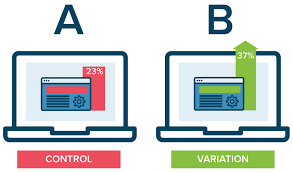
Test, Test, Test: What works for one audience or platform might not work for another. Run A/B tests on your hooks to see which ones perform best.
Authenticity Matters: Don’t make promises you can’t keep. Whether it’s a benefit, a solution, or urgency, be truthful.
By applying these formulas, you can move beyond generic ads. You can create compelling messages that resonate. You can make your ads work harder for you.
Real-World Ad Hook Examples (and Why They Work)
Let’s look at some real examples you might see online and break down the hook.
Example 1 (Social Media Ad for a Meal Kit):
Hook: “Dinner on the table in 15 minutes? Yes, it’s possible.”
Analysis: This is a combination of a question hook and a direct benefit hook. It asks if something desirable is possible and then confirms it. It taps into the common pain of not having enough time for dinner.
Example 2 (Search Ad for a Productivity App):
Hook: “Beat Procrastination. Get More Done. Free Trial.”
Analysis: This uses a problem/pain point hook (“Beat Procrastination”) followed by a direct benefit (“Get More Done”). The “Free Trial” is a clear call to action and a value proposition.
Example 3 (Display Ad for a Travel Agency):
Hook: “Dreaming of the perfect vacation? We make it happen.”
Analysis: This starts with a relatable desire/question hook (“Dreaming of the perfect vacation?”) and then offers a confident promise/benefit (“We make it happen”).
Example 4 (Video Ad for a Skincare Product):
Hook (Opening Scene/Voiceover): “I used to hide my skin. I felt so self-conscious about these dark spots. Then I found this.”
Analysis: This is a strong story/anecdote hook combined with a problem/pain point. It immediately creates empathy and curiosity, setting the stage for the product reveal.
Example 5 (Email Subject Line for an E-commerce Sale):
Hook: “🔥 LAST CHANCE: 40% OFF Everything Ends Tonight! 🔥”
Analysis: This is pure urgency and scarcity. The emojis grab attention, “LAST CHANCE” and “Ends Tonight” create immediate pressure, and “40% OFF Everything” is a massive benefit.
These examples show how formulas can be applied across different platforms and for various goals. The core idea is always to grab attention and make the viewer want to know more.
Quick Fixes & Tips for Better Hooks
Sometimes, small changes can make a big difference. Here are some quick tips to improve your existing ad hooks.
1. Shorten Your Sentences: If your hook is long, try breaking it into two shorter sentences. Shorter sentences are easier to scan and understand quickly.
2. Use Stronger Verbs:
3. Add a Number: Numbers make your hook more specific and often more compelling. “Ways to relax” becomes “5 ways to relax instantly.”
4. Focus on the “You”: Address the viewer directly. Use “you” and “your” to make it personal.
5. Use Intriguing Adjectives: Words like “secret,” “hidden,” “surprising,” “unbelievable,” or “game-changing” can add spice.
6. Remove Jargon: If your hook uses industry terms, simplify them. Assume your audience doesn’t know the lingo.
7. Read it Aloud: Does it sound natural? Is it easy to say?
If it feels awkward, it might be too complex.
These simple tweaks can refresh your hooks and make them more effective. It’s all about clarity and impact.
Hook Improvement Ideas
Current Hook: “Our new software helps businesses streamline operations.”
Improved Hook: “Tired of slow business operations? Streamline everything in 7 days!” (Problem + Benefit + Urgency)
Current Hook: “Learn about effective marketing strategies.”
Improved Hook: “The #1 marketing secret you’re missing? Find out now!” (Curiosity + Benefit + Urgency)
Frequent Questions About Ad Hooks
What is the best ad hook formula?
There isn’t one single “best” formula. The most effective hook depends on your audience, your product or service, and the platform you’re using. Direct Benefit, Problem/Pain Point, and Curiosity Gap hooks are generally very strong and widely applicable.
How long should an ad hook be?
Hooks should be very short and to the point, ideally between 5 to 10 words. The goal is to grab attention instantly. This means avoiding long, complex sentences and getting straight to the core message.
Can I use multiple formulas in one hook?
Absolutely! Combining formulas, such as a problem hook followed by a benefit, or a curiosity hook with a hint of urgency, can make your ad even more powerful. This layered approach often creates a stronger connection and encourages more clicks.
How do I know if my hook is working?
The best way to know if your hook is working is through testing. Track your ad’s performance metrics like click-through rates (CTR), engagement rates, and conversion rates. If these numbers are low, your hook might need improvement or testing against alternatives.
What if my product doesn’t have an obvious benefit?
If your product or service doesn’t have a single, obvious benefit, focus on the transformation it offers. How does it make the user feel? Or, focus on solving a lesser-known pain point.
Sometimes, the benefit is convenience, peace of mind, or learning something new.
Should I use emojis in my hooks?
Emojis can be very effective for grabbing attention, especially on social media. They add visual appeal and can convey emotion quickly. However, use them wisely and ensure they fit your brand’s tone.
Too many emojis can look unprofessional or spammy.
Conclusion: Hook Your Way to Success
Crafting a compelling ad hook is an art and a science. By understanding these formulas and practicing them, you can create ads that truly stand out. Remember to focus on your audience, be clear, and always test your results.
A great hook is your first step to a great ad campaign.