
Understanding Ad Creative A/B Testing
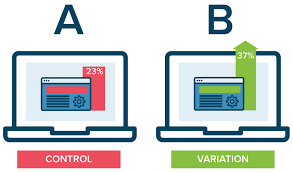
Ad creative A/B testing is a way to compare two versions of your ad. You show both versions to similar groups of people. Then, you see which one does better.
It’s like having two ideas and testing them to see which one people like more. This helps you make smarter choices about your ads.
Think of it like this: you have a catchy slogan. Should you use a red button or a blue button on your ad? A/B testing helps you figure that out.
You show half your audience the ad with the red button. You show the other half the ad with the blue button. Then you count clicks.
The button color that gets more clicks is the winner.
This whole process helps you avoid wasting money on ads that don’t work. It makes sure your ads connect with your audience. Good testing means better ads.
Better ads mean more people see them, click them, and buy from you. It’s a simple but powerful way to improve your marketing.
We will explore why this is so vital for your marketing campaigns. We will also look at the best ways to set up your tests. You’ll learn what to measure.
Plus, we’ll talk about common mistakes to avoid. By the end, you’ll feel confident in your ability to test and improve your ad creative.
A/B testing ad creative involves testing two or more variations of an advertisement against each other to determine which performs better. This data-driven approach helps optimize campaigns by identifying the most effective messaging, visuals, and calls-to-action for a target audience, leading to improved engagement and conversion rates.
Why A/B Testing Ad Creative Matters So Much
In today’s busy world, grabbing people’s attention is tough. Your ads need to stand out. They need to speak directly to the people you want to reach.
A/B testing is your secret weapon here. It takes the guesswork out of advertising.
You might think your ad is perfect. Your team might love it. But will your customers?
A/B testing shows you what your customers actually respond to. It’s about their preferences, not just yours. This makes your marketing much more effective.
When you test your ads, you learn. You learn what words grab attention. You learn what images stop people from scrolling.
You learn what offers make them click. This knowledge helps you create ads that truly connect. You can make ads that resonate and drive action.
Testing also saves you money. Imagine spending a lot on ads that don’t perform. That’s money down the drain.
By testing, you find the best-performing ads first. You then put more of your budget into those winning ads. This leads to a better return on your investment.
Let’s dive into some specific reasons why this testing is a game-changer for your advertising efforts. We’ll break down the benefits so you can see the big picture. Understanding these points will help you commit to testing.
Boosts Conversion Rates
The main goal of most ads is to get people to do something. This could be buying a product, signing up for a newsletter, or visiting a website. A/B testing helps you find the ad version that gets the most people to take that desired action.
For example, one ad might have a picture of a happy family. Another might show a close-up of the product. Testing these can reveal which image leads to more sales.
Small changes can have a big impact on your sales numbers. This is what we call increasing your conversion rate. It means more of the people who see your ad become customers.
Improves Ad Spend Efficiency
Your advertising budget is precious. You want every dollar to work as hard as possible. A/B testing ensures you’re spending your money on ads that actually work.
You can stop wasting money on ads that get few clicks or conversions.
Instead, you can focus your budget on the ads that deliver the best results. This means you get more bang for your buck. Your return on ad spend (ROAS) will go up.
It’s about being smart with your money. Testing helps you make those smart decisions.
Enhances Audience Understanding
Every time you test, you learn more about your audience. You start to see patterns. What kind of language do they respond to?
What visuals catch their eye? What problems do they want solved?
This deeper understanding helps you in all your marketing efforts, not just ads. You can use this knowledge to create better products, better website content, and better customer service. It’s like getting a direct line to your customers’ minds.
This helps you build stronger relationships with them over time.
Reduces Risk
Launching a big ad campaign without testing is risky. You might invest a lot of time and money into something that falls flat. A/B testing lets you test on a smaller scale first.
You can learn and adjust before going all-in.
This small-scale testing reduces the risk of a major failure. It allows you to make educated guesses. You can then confirm those guesses with real data.
This makes your marketing strategy more solid and less prone to big mistakes. It provides a safety net.
Drives Continuous Improvement
The digital advertising world changes fast. What works today might not work tomorrow. A/B testing is not a one-time thing.
It’s an ongoing process. By constantly testing, you keep your ads fresh and effective.
You can adapt to new trends and audience preferences. This continuous improvement means your advertising stays competitive. It ensures you’re always putting your best foot forward.
Your campaigns will likely perform better over the long term.
Key Takeaways for A/B Testing
What is A/B Testing? It’s comparing two versions of an ad to see which is better.
Why Do It? It boosts sales, saves money, helps you know your customers, cuts risk, and makes ads better over time.
It’s About Data. Test what you think might work, then let the numbers tell you the truth.
Getting Started: Planning Your Ad Creative A/B Test
So, you’re convinced A/B testing is the way to go. That’s great! Now, let’s talk about how to actually do it.
Good planning is the first step to a successful test. Without a solid plan, your test might not give you clear answers.
You need to know what you’re testing, why you’re testing it, and what you hope to achieve. This might sound simple, but it’s where many people stumble. They jump into testing without a clear goal.
This leads to confusion and wasted effort.
Let’s walk through the essential steps to get your A/B test set up right. We will cover how to choose what to test, how to set up your test, and what tools you can use. Getting this right means your test will give you valuable insights.
1. Define Your Goal
What do you want to achieve with this test? Be specific. Do you want more clicks?
More sales? More people to sign up? A clear goal is your roadmap.
It tells you what to look for in your results.
For instance, if your goal is to get more people to buy a product, your test should focus on elements that drive purchases. If your goal is to get more people to your website, focus on elements that encourage clicks to your site.
Example Goal: Increase click-through rate (CTR) on Facebook ads by 10% in the next month.
2. Identify What to Test (The Variable)
In A/B testing, you only change one thing at a time. This is crucial. If you change too many things, you won’t know which change made the difference.
This single change is called the variable.
Common elements to test include:
- Ad Headline
- Ad Image or Video
- Call-to-Action (CTA) Button Text (e.g., “Shop Now” vs. “Learn More”)
- Ad Copy (the main text of the ad)
- Target Audience (though this is often tested separately)
- Offer or Discount
Pick just ONE of these to change for your test. For example, you might test two different headlines. Or you might test two different images.
Keep everything else the same between the two ads.
3. Create Your Test Variations
Now, create your two versions of the ad. These are your “A” and “B” versions.
Version A (Control): This is your current or standard ad. It’s what you’re comparing against.
Version B (Variant): This is the ad with your single change. It’s the one you’re testing.
Make sure the only difference between Version A and Version B is your chosen variable. For example, if you’re testing headlines, Version A will have Headline 1, and Version B will have Headline 2. All other parts of the ad should be identical.
4. Choose Your Testing Platform
Where will you run your ads? Most major advertising platforms have built-in A/B testing tools. This makes it easy to set up and manage your tests.
Popular platforms include:
- Facebook Ads Manager
- Google Ads
- LinkedIn Campaign Manager
- Pinterest Ads
These platforms allow you to create two identical ad sets, but with different creative elements. They then help split your audience and track results.
5. Determine Your Sample Size and Duration
How many people need to see your ads for the test results to be reliable? This is your sample size. How long will the test run?
This is your duration.
These depend on your budget, your audience size, and how quickly you need results. Generally, you need enough people to see the ads to get statistically significant results. This means the results are not due to random chance.
Most platforms will suggest a sample size. If not, aim for at least 1,000 impressions per ad variant. For duration, run the test until you have enough data.
This could be a few days or a couple of weeks. Avoid stopping a test too early.
Ad Creative Variables to Test
Headline Ideas
Test: “Save Big This Summer” vs. “Summer Savings Start Now”
Image Ideas
Test: Product shot vs. Lifestyle image of product in use
Call-to-Action (CTA) Text
Test: “Shop Now” vs. “Get Yours Today”
Ad Copy Angles
Test: Focus on benefits vs. Focus on features
Running Your Ad Creative A/B Test
You’ve planned your test. Now it’s time to put your plan into action. Running the test involves setting it up correctly on your chosen platform.
Then, you need to let it run and collect data.
It’s easy to get excited and want to check results constantly. But try to be patient. Let the test gather enough data before you start looking too closely.
This ensures the data is meaningful.
Here’s how to run your test smoothly.
Setting Up Your Test on Ad Platforms
Each platform has a slightly different process. But the core idea is the same. You create two ads that are identical except for the one element you are testing.
For Facebook Ads:
- Create an ad set.
- Duplicate this ad set.
- In the first ad set, create your Version A ad.
- In the second ad set, create your Version B ad. Make sure all other settings (budget, targeting, placement) are the same.
- Some platforms allow you to set up A/B tests directly within the campaign creation flow.
For Google Ads:
- You can create experiment drafts.
- Choose the campaign you want to test.
- Create a new experiment.
- Set up your experiment (e.g., testing two different ad creatives within the same ad group).
- Google Ads will automatically split traffic between your original ad and your new ad creative.
The key is ensuring your test conditions are fair. This means the same budget, same audience, and same ad placements for both versions. This way, any difference in performance is due to the creative itself.
Monitoring Your Test
Once your test is live, keep an eye on it. However, resist the urge to make decisions too quickly. You need enough data for the results to be reliable.
Most platforms will show you real-time performance metrics.
Look at key indicators like click-through rate (CTR), cost per click (CPC), and conversion rate. These will give you an idea of how each ad version is performing relative to the other. Remember your goal.
Which ad is moving you closer to that goal?
It’s also important to be aware of external factors. Was there a holiday sale? Did a competitor launch a major campaign?
Sometimes, outside events can influence ad performance. Try to run your tests during normal business periods if possible.
Stopping Your Test
When do you know it’s time to stop the test? There are a few indicators.
- Statistical Significance: Most platforms will tell you when results are statistically significant. This means the difference in performance is likely real and not random.
- Clear Winner: One ad version is clearly outperforming the other by a significant margin.
- Reaching Your Goal: You’ve gathered enough data to make a decision based on your defined goal.
- Time Limit: You’ve run the test for your predetermined duration.
Don’t stop a test just because you don’t like the results of one variation. Let the data guide you. Even if your “control” ad wins, that’s valuable information!
Quick Check Before Launching
Goal Defined? Yes/No
One Variable Changed? Yes/No
Identical Settings? Yes/No
Sufficient Budget? Yes/No
Ready to Monitor? Yes/No
Analyzing Your A/B Test Results
You’ve run your test. You’ve stopped it. Now comes the most exciting part: seeing what you’ve learned.
Analyzing the data will tell you which ad creative won and why.
This is where the real value of A/B testing comes in. It’s not just about running tests; it’s about understanding the results and applying that knowledge. A good analysis turns data into actionable insights.
Let’s break down how to look at your results and what they mean.
Key Metrics to Examine
As mentioned before, focus on the metrics that relate to your original goal. Here are some common ones:
- Click-Through Rate (CTR): This is the percentage of people who click on your ad after seeing it. A higher CTR means your ad is more engaging.
- Conversion Rate: This is the percentage of people who complete a desired action (like a purchase or signup) after clicking your ad. This is often the most important metric.
- Cost Per Click (CPC): How much you pay each time someone clicks your ad. Lower CPC is generally better.
- Cost Per Acquisition (CPA) or Cost Per Conversion: How much you pay for each conversion. Lower CPA is better.
- Return on Ad Spend (ROAS): The revenue generated for every dollar spent on advertising. Higher ROAS is always the goal.
- Engagement Rate: Likes, shares, comments. This shows how much people interact with your ad.
Compare these metrics between Version A and Version B. Which version performed better for the metrics that matter most to your goal?
Understanding Statistical Significance
This is a crucial concept. Statistical significance tells you if the difference you see in performance is real or just random luck. Imagine flipping a coin twice.
You get heads both times. That doesn’t mean the coin is unfair. You need many more flips to know for sure.
Most ad platforms will provide a “confidence level” or indicate statistical significance. Aim for at least a 90% confidence level. This means you are 90% sure the results are not due to chance.
If the results aren’t statistically significant, you may need to run the test longer or with a larger audience.
Drawing Conclusions and Making Decisions
Once you have statistically significant results, you can draw conclusions.
Scenario 1: Version B Wins. If Version B clearly outperformed Version A based on your key metrics and statistical significance, then Version B is your winner. You should now use Version B as your main ad creative.
Scenario 2: Version A Wins. If your original ad (Version A) performed better, stick with it. This is still a win because you avoided switching to a less effective creative.
Scenario 3: Inconclusive Results. If there’s no clear winner or statistical significance, you might need to re-evaluate. Perhaps the change you made was too small. Or maybe your sample size was too low.
You might consider running the test again with a different variable or for a longer period.
Always document your findings. What did you test? What were the results?
What did you decide to do? This creates a valuable history of what works for your audience.
Result Analysis Checklist
Key Metric 1 (e.g., CTR):
Version A: | Version B: | Winner:
Key Metric 2 (e.g., Conversion Rate):
Version A: | Version B: | Winner:
Statistical Significance Achieved? Yes/No
Decision: Adopt Version / Re-test / Other
Common Pitfalls to Avoid in Ad Creative A/B Testing
A/B testing sounds straightforward, but it’s easy to make mistakes. These errors can lead to flawed data and wasted effort. Being aware of these common pitfalls will help you avoid them.
It will ensure your tests are accurate and valuable.
I’ve seen many campaigns struggle because of these simple oversights. Let’s look at what to watch out for so your tests are more successful.
1. Testing Too Many Variables at Once
This is perhaps the most common mistake. If you change the headline, the image, and the CTA all at once, you won’t know which change caused the performance difference. Always test only one variable per test.
If you want to test headlines and images, run two separate tests. First, test two headlines with the same image. Then, test two images with the winning headline.
2. Not Having a Clear Hypothesis
A hypothesis is an educated guess. For example, “I believe changing the CTA button from ‘Shop Now’ to ‘Get Deal’ will increase clicks because it sounds more urgent.”
Without a hypothesis, you’re just changing things randomly. A hypothesis gives your test direction. It helps you understand why one version might perform better.
3. Stopping Tests Too Early
You might see one ad doing slightly better early on. It’s tempting to call it a winner and stop the test. But early results can be misleading.
Random fluctuations or a small sample size can skew early data.
Run your test until you reach statistical significance or your predetermined time frame. This ensures your results are reliable and not just a fluke.
4. Poorly Defined Goals or Metrics
If you don’t know what you’re trying to achieve, you can’t measure success. Are you aiming for more website visits or more actual sales? These are different goals with different key metrics.
Make sure your goal is clear and that you are tracking the right metrics to measure progress towards that goal. Don’t get distracted by vanity metrics if they don’t contribute to your main objective.
5. Not Considering External Factors
Sales, holidays, news events, or competitor actions can all influence ad performance. If a major event happens during your test, it might affect the results unfairly. Try to run your tests during periods of relative normalcy for your business.
If an event does occur, acknowledge it. It might mean you need to repeat the test later to get a clearer picture of your creative’s true performance.
6. Ignoring Negative Results
Sometimes, your current ad (the control) performs better than your new variation. This is not a failure! It’s valuable data.
It tells you that your current creative is effective. Don’t be disappointed; be informed.
This insight helps you understand what resonates with your audience. It prevents you from making a change that could have hurt your campaign.
Common A/B Test Mistakes
One-Variable Rule
Mistake: Changing headline and image together.
Fix: Test them separately.
Statistical Significance
Mistake: Stopping test too soon.
Fix: Wait for data to be reliable.
Clear Goals
Mistake: Not knowing what success looks like.
Fix: Define your goal and metrics upfront.
Advanced Strategies for Ad Creative Testing
Once you’ve mastered the basics of A/B testing, you can explore more advanced strategies. These can help you get even more out of your advertising efforts. They allow for deeper insights and more complex testing scenarios.
Think of these as ways to refine your approach. They help you uncover smaller, but still important, improvements. They can also help you test more complex ideas.
Multivariate Testing (MVT)
While A/B testing compares two versions of an ad, multivariate testing (MVT) tests multiple variations of several elements at once. For example, you could test three different headlines and two different images simultaneously.
MVT allows you to see not only which combination performs best but also how each element (headline, image) impacts the overall performance. This can be very powerful but requires a much larger audience and more sophisticated tools to get reliable results.
When to Use: When you have a large audience and want to understand the interplay between different creative elements.
Split Testing Beyond Just Creative
A/B testing isn’t limited to just the ad’s visual or text. You can also test other aspects of your campaign:
- Landing Pages: Test different versions of the page users see after clicking the ad. Does a different headline on the landing page improve conversions?
- Audience Targeting: Test whether Ad Version A performs better with Audience X, while Ad Version B performs better with Audience Y.
- Bidding Strategies: Test if different bidding strategies affect ad performance.
- Ad Placements: Test if ads perform better on certain platforms (e.g., Instagram Stories vs. Facebook Feed).
By testing these elements, you get a holistic view of what makes your campaign successful. You optimize the entire customer journey, not just the ad itself.
Personalization and Dynamic Creative
Modern ad platforms offer dynamic creative optimization (DCO). This technology can automatically assemble ads using different combinations of headlines, images, and copy based on what the platform predicts will work best for each individual user.
While this isn’t traditional A/B testing, it relies on the same principle: testing different components to find winning combinations. You feed the platform various assets, and it does the testing and optimization for you.
This is highly effective for large campaigns with diverse audiences. It ensures each user sees an ad that is most likely to resonate with them.
Frequency Capping and Ad Fatigue
As people see your ad repeatedly, they can get tired of it. This is called ad fatigue. Performance can drop over time.
You can test different ad frequencies (how many times an average person sees your ad) to see what works best. You might also test introducing new creative after a certain period to combat fatigue.
Running tests on how often people see your ads can help you maintain engagement and prevent your budget from being wasted on worn-out creatives.
Using AI for Test Ideas and Analysis
Artificial intelligence (AI) is increasingly being used to help with A/B testing. AI tools can analyze large datasets to suggest which elements might be worth testing. They can also help predict which variations might perform best.
Some AI tools can even automate parts of the testing process or provide deeper insights into performance data. This can save you time and help you uncover opportunities you might have missed.
Advanced Testing Concepts
Multivariate Testing (MVT)
What it is: Testing many creative elements at once.
Benefit: Understand how elements interact.
Landing Page Tests
What it is: Testing the page users click to.
Benefit: Improve the entire user journey.
Dynamic Creative
What it is: Ads that build themselves for each user.
Benefit: Highly personalized ads.
My Personal Experience with Ad Creative Testing
I remember a few years back, I was working on a campaign for a small e-commerce store. They sold handmade soaps. We had this one ad that we thought was amazing.
It featured a beautifully shot photo of the soaps with a simple, elegant font.
The client loved it. We put it live. And… it performed okay.
Not great, just okay. We were getting clicks, but not many sales. The cost per sale was a bit high.
I felt a knot in my stomach. We had invested a good amount of money into this ad. I decided we had to test.
My first instinct was to change the photo. Maybe the beautiful photo was too artistic and not clear enough about what was being sold?
So, I created a second version. Instead of the elegant photo, I used a simple, clear shot of just the soaps on a plain white background. The headline and ad copy stayed exactly the same.
We set up a split test on Facebook Ads Manager. We budgeted enough to get at least 5,000 impressions for each ad.
For the first few days, the results were very close. I was starting to worry. Then, around day five, the new ad with the simple photo started pulling ahead.
By the end of the week, the results were clear: the ad with the plain background had a 40% higher conversion rate. It also had a 25% lower cost per sale.
It was eye-opening. The beautiful, artistic photo was nice to look at, but it didn’t clearly communicate the product’s value to potential buyers. The simple, direct photo was much more effective at showing what people would get.
This taught me a huge lesson: don’t let personal preference or artistic ideas get in the way of what your audience actually responds to. Data is king.
When to Stop Testing and Scale
You’ve tested. You’ve analyzed. You’ve found a winning ad creative.
Congratulations! Now comes the exciting part: scaling your campaign.
Scaling means increasing your ad spend. You want to show your successful ad to more people. But there’s a right way and a wrong way to do it.
You don’t want to increase your budget too quickly and mess up your good results.
Here’s how to approach scaling after a successful test.
Gradual Budget Increases
Don’t jump from a $10/day budget to $1,000/day overnight. Instead, increase your budget gradually. A common approach is to increase your daily budget by no more than 10-20% every few days.
This allows the ad platform’s algorithm to adjust. It helps you maintain good performance as you spend more. If you increase too fast, the platform might not be able to find enough of your target audience efficiently, and your costs could go up.
Monitor Performance Closely During Scaling
As you increase your budget, keep a very close eye on your key metrics. Are your CTR, conversion rate, and CPA still in line with your winning test results?
If you see your CPA start to climb significantly or your CTR drop, it might mean you’re scaling too fast or reaching the limits of your current audience. You may need to pause, re-evaluate, and adjust your strategy. Sometimes, you might need to test new audiences or variations as you expand.
Look for Audience Saturation
At some point, you might find that you’re showing your ad to a large portion of your target audience. This is called audience saturation. When this happens, performance can naturally start to decline.
At this stage, you might need to:
- Expand your target audience slightly.
- Test new ad creatives to refresh performance.
- Look for lookalike audiences based on your best customers.
It’s a sign that you’ve extracted most of the value from your current setup. It’s time to innovate again.
When to Consider New Tests
Even when a campaign is scaling well, it’s important to keep testing. Ad fatigue is real. Audience preferences change.
Competitors evolve.
Continue to run smaller A/B tests on your winning creative. Test new angles, new visuals, or new offers. This helps you stay ahead of the curve and ensures your campaign remains effective long-term.
Think of testing as ongoing maintenance. It keeps your advertising engine running smoothly and efficiently, even as you grow.
Frequently Asked Questions about Ad Creative A/B Testing
How many ads should I test at once?
It’s best to test only two ads (A vs. B) at a time. This is called A/B testing.
It ensures you know exactly which change made the difference. Testing more than two ads at once is called A/B/n testing, and it requires a larger audience to get reliable results.
What is the most important metric to track?
The most important metric depends on your campaign goal. If you want sales, track conversion rate and cost per acquisition (CPA). If you want website visits, track click-through rate (CTR) and cost per click (CPC).
How long should I run an A/B test?
Run your test until you achieve statistical significance, meaning the results are reliable. This usually takes at least a few days to a couple of weeks, depending on your audience size and budget. Avoid stopping too early.
What if my new ad creative performs worse?
That’s perfectly fine! It means your original ad (the control) is better. This is still a valuable insight.
You learned what doesn’t work, which is just as important as learning what does. You can then use your original, better-performing ad.
Can I A/B test images and text in the same test?
No, you should not. To know which change had an impact, you must change only one thing at a time. Test your images in one test, and your text (like headlines or copy) in a separate test.
This ensures your results are clear and actionable.
What is statistical significance?
Statistical significance means that the difference in performance between your ad variations is likely due to the changes you made, not just random chance. Ad platforms often show a confidence level. Aim for at least 90% confidence for reliable results.
Should I test on mobile and desktop separately?
It’s a good idea to monitor performance by device type (mobile, desktop, tablet). Sometimes, an ad performs very differently on mobile versus desktop. You can then create separate tests optimized for each device if needed, or even run separate campaigns targeting specific devices.
Conclusion
A/B testing your ad creative is not just a good idea; it’s essential for effective advertising. It takes the guesswork out of your campaigns. It helps you connect with your audience better.
It ensures your marketing budget works harder for you.
Start small, focus on one variable at a time, and let the data guide your decisions. Every test you run teaches you something valuable. This knowledge will make your future ads even more successful.
Keep testing, keep learning, and watch your results improve.
