
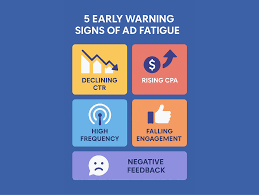
Ad fatigue shows up when your ads lose their impact. Your audience stops responding. This means your ads are seen too often. They become boring or irritating. Knowing the signs helps you fix your campaigns. You can then bring back interest and get better results.
What is Ad Fatigue?
Ad fatigue is when people get tired of seeing the same ad. This happens over time. Their brains start to ignore it.
It’s like hearing the same song on repeat. After a while, you don’t even notice it anymore. Or, you might start to dislike the song.
The same thing happens with ads. Your audience is exposed to many messages every day. They have limited attention.
When an ad doesn’t change, it loses its power.
This is more than just people seeing an ad a few times. It’s about repeated exposure within a short period. Or seeing the same ad across different platforms.
Your audience’s initial interest fades. They become less likely to click or convert. This is a natural part of advertising.
But it’s also something you can manage.
My Own Brush with Ad Fatigue
I remember launching a new service. I was so excited! I created one great ad.
It had a funny video and a clear call to action. For the first week, it was amazing. Traffic poured in.
Sales were great. I thought I had found the golden ticket. I kept running the same ad.
I didn’t change anything. By week three, I noticed the clicks were lower. The cost per conversion went up.
My team was asking, “Is this ad still working?” I felt a knot in my stomach.
I was so focused on the initial success that I missed the signs. The ad was getting stale. People had seen it enough.
It stopped being exciting. It was a hard lesson, but a crucial one. It taught me that even a good ad needs a refresh.
I learned to watch the data closely. I also learned to trust my gut feeling.
Signs of Stale Ads
Low Click-Through Rate (CTR): Fewer people click the ad.
Rising Cost Per Click (CPC): It costs more to get one click.
Decreasing Conversion Rate: Fewer people complete the desired action.
Audience Complaints: People might comment that they see the ad too much.
Negative Feedback: Likes go down, dislikes or angry emojis go up.
Spotting the Signs: What to Look For
There are several clear signals that your ads are suffering from fatigue. Paying attention to these can save your campaign. It helps you act before things get too bad.
You need to look at your campaign’s performance metrics. These numbers tell a story. They show how your audience is reacting.
One of the first signs is a drop in your click-through rate, or CTR. This is the percentage of people who see your ad and then click on it. If this number starts to fall, it means your ad is less appealing.
People are scrolling past it more often. They don’t feel the urge to click anymore.
Key Metrics to Watch
- Click-Through Rate (CTR): How often do people click your ad after seeing it? A falling CTR is a big red flag.
- Cost Per Click (CPC): How much do you pay for each click? If this rises, your ad might be losing value.
- Conversion Rate: How many clicks turn into actual sales or leads? A decline here is serious.
- Frequency: How many times, on average, does one person see your ad? High frequency is a direct cause of fatigue.
- Return on Ad Spend (ROAS): Are you making more money than you’re spending? A drop in ROAS often signals fatigue.
Another big sign is a rising cost per click (CPC). As your ad becomes less effective, the ad platforms might charge you more to show it. This is because the platform sees your ad is not performing well.
It needs to compete harder for attention. So, you end up paying more for the same results. Or even fewer results.
Your conversion rate is also a critical metric. This tells you how many people who click your ad actually do what you want them to do. They might sign up for a newsletter.
They might buy a product. If this rate drops, it means the people who are still clicking are less likely to convert. They might be clicking out of habit, not genuine interest.
The Frequency Factor
What is Frequency? Frequency is the average number of times a unique user has seen your ad.
When is Frequency Too High? This varies by audience and ad type. But generally, a frequency of 3-5 in a short period can start causing issues. For some campaigns, it might be even lower.
Why it Matters: High frequency means the same people are seeing your ad over and over. This is the main driver of ad fatigue.
Monitoring is Key: Most ad platforms show you the average frequency. Keep an eye on this number.
Finally, watch for negative comments or feedback. If people start commenting things like “I’ve seen this ad a million times!” or expressing annoyance, that’s a clear sign. Social media platforms can be great for getting direct feedback.
Even if it’s not direct comments, you might see a rise in negative reactions like angry emojis.
Why Ad Fatigue Happens
The core reason for ad fatigue is repetition. Our brains are wired to filter out constant stimuli. Think about living near a train track.
After a while, you don’t hear the train anymore. Your brain tunes it out. The same thing applies to ads.
When an ad is shown too often to the same person, it loses its novelty. It becomes background noise. People stop paying attention.
This is especially true for the initial creative. If your ad is very similar to others your audience sees, it’s even easier to ignore. Plus, the digital world is crowded.
We are bombarded with ads on social media, websites, and even in apps. Our minds become resistant to the constant onslaught. Only fresh, engaging content can break through.
Common Causes of Fatigue
- Overexposure: Showing the same ad too many times to the same people.
- Lack of Variety: Using only one ad creative for a long period.
- Irrelevant Targeting: Showing ads to people who aren’t interested. They see it more and get annoyed.
- Boring Content: The ad isn’t engaging or interesting enough to hold attention.
- Competitor Noise: The market is flooded with similar ads, making yours blend in.
Another factor is how well the ad fits the audience. If an ad isn’t relevant to the person seeing it, they’re more likely to get annoyed by it. They might not be in the market for your product.
Yet, they keep seeing your ad. This can lead to negative feelings towards your brand. It’s not just about seeing it too often; it’s about seeing something that doesn’t matter to you, too often.
The environment where the ad is shown also plays a role. An ad that might be fine on a desktop computer might feel intrusive on a mobile device. Or an ad that works well in a news feed might be annoying on a video.
The context matters for how an ad is received.
Real-World Scenarios of Ad Fatigue
Imagine you’re scrolling through Instagram. You see a colorful ad for a new coffee shop. It looks interesting, so you click.
You buy a coffee. Great! The next day, you’re back on Instagram, and you see the same ad.
Okay, maybe you noticed it again. Then, you see it again the day after. And again.
By the third or fourth day, you might start to feel a little tired of it. You might even think, “Ugh, this ad again.” That’s ad fatigue setting in.
Or think about YouTube. You’re trying to watch a video, and a video ad pops up. If it’s a good ad, you might watch it.
If it’s the same ad you’ve seen for the past week, you might hit “Skip Ad” faster than usual. If the ad is long, and you can’t skip it for 30 seconds, you might get really frustrated. This frustration can turn into a dislike for the brand.
Ad Placement Impacts
Social Media Feeds: Constant scrolling means ads can blend in or stand out. High frequency here leads to quick annoyance.
YouTube Pre-Roll Ads: If skippable, users will skip if they’ve seen it. Unskippable ads cause higher frustration with fatigue.
Display Networks (Websites): Banners can become invisible “banner blindness.” Repeatedly seeing the same banner makes it ignorable.
Search Ads: While relevant, seeing the same brand’s ad at the top every single search can feel a bit much.
Let’s consider banner ads on websites. You might be reading an article, and see ads for shoes. You’re not looking for shoes right now.
But the ads keep appearing. Day after day, you see the same shoe ads. Eventually, you just stop seeing them.
Your brain filters them out completely. This is called “banner blindness.” It’s a form of ad fatigue where the visual stimulus becomes invisible.
Even in more targeted ads, fatigue can occur. If you search for a product, and then see ads for that exact product everywhere you go online for weeks, it can start to feel intrusive. While it’s relevant, the sheer volume can become overwhelming.
This is why a strategy that mixes retargeting with broader awareness campaigns is often best.
What This Means for Your Campaigns
When your ads hit fatigue, your campaign suffers. Your ad spend becomes less efficient. You’re paying more for fewer results.
This can hurt your budget and your overall marketing goals. It’s like pouring water into a leaky bucket. No matter how much you add, it doesn’t fill up effectively.
It can also damage your brand’s reputation. If people get annoyed by your ads, they might start to dislike your brand. This is the opposite of what you want.
Instead of building positive associations, you’re creating negative ones. This can be hard to recover from. It can lead to fewer sales and less customer loyalty in the long run.
Impact on Your Business
Wasted Budget: Money spent on ads that no longer convert is a direct loss.
Lower ROI: The return on your advertising investment drops significantly.
Brand Damage: Annoyed customers can lead to negative reviews or word-of-mouth.
Missed Opportunities: While focusing on a fatigued ad, you miss chances to reach new audiences effectively.
Campaign Stagnation: Growth stops, and campaigns fail to meet new targets.
Furthermore, fatigued ads can mask underlying issues. You might think your product isn’t selling well. But it could be that your ads are just tired.
You might miss out on identifying new audiences or creative angles that could be more successful. It’s crucial to recognize fatigue so you can make informed decisions about your marketing strategy.
It’s not just about the immediate performance drop. Ad fatigue can lead to a general decline in engagement. People might stop interacting with your brand altogether.
They might stop opening your emails or following your social media. This is because their initial positive exposure has turned sour.
When to Worry and When It’s Normal
Seeing a slight dip in performance over time is normal. Ad performance naturally fluctuates. Seasons change, competitors adjust, and audience interests evolve.
A small decrease in CTR or a slight rise in CPC isn’t always a sign of major fatigue.
You should start to worry when these dips become steep and consistent. If your CTR is dropping steadily week over week, and your frequency is increasing, that’s a strong indicator of fatigue. If you’re seeing a significant increase in your cost per conversion, it’s time to pay close attention.
Also, any direct negative feedback from your audience is a warning sign.
Normal Fluctuations vs. Fatigue
Normal: Small, gradual dips in performance. Slight increases in CPC. Occasional flat periods.
Worrying: Steep, consistent drops in CTR and conversion rates. Rapidly increasing frequency. A sharp rise in CPC and Cost Per Acquisition (CPA).
Negative comments and user complaints.
Think of it like this: If your car makes a little sputtering sound once, it might be nothing. If it starts sputtering every time you accelerate, you know there’s a problem that needs fixing. The same applies to ad campaigns.
A minor blip is okay. A consistent downward trend means it’s time to investigate and make changes.
It’s also normal for some ad formats or platforms to experience fatigue faster than others. Video ads might hold attention longer than static banner ads. But even the most engaging video can become tired if shown too many times.
The key is to have a system in place to monitor performance and identify these trends early.
Quick Tips to Combat Ad Fatigue
The best way to combat ad fatigue is through proactive management. Don’t wait until your ads are completely ignored. You need to keep things fresh.
This means regularly updating your ad creatives. You should also look at your targeting and audience segmentation.
One of the simplest solutions is to create new ad variations. Use different images, videos, headlines, and calls to action. Even small changes can make a big difference.
For instance, change the background color of an image. Or try a different angle in a video. These small updates can make the ad feel new again to your audience.
Refreshing Your Ads
- New Creatives: Always have a few different ad versions ready. Test them against each other.
- Vary Your Messaging: Highlight different benefits or features of your product/service.
- Update Visuals: Use different images or videos. Consider seasonal or trending visuals.
- A/B Test: Continuously test new elements to see what resonates best.
- Refresh Landing Pages: Make sure the page users land on matches the ad’s promise and offers a fresh experience too.
Another effective strategy is to segment your audience. Instead of showing the same ad to everyone, break your audience into smaller groups. Show different ads to different groups.
For example, you might have one ad for new customers and another for people who have visited your website before. This tailored approach makes the ads more relevant.
You should also set frequency caps. Most advertising platforms allow you to limit how many times a person sees your ad within a certain period. Use this feature.
It’s a direct way to prevent overexposure and reduce fatigue. A frequency cap of 3-5 exposures per week is often a good starting point.
Smart Targeting Strategies
New Audience Focus: Create ads specifically for people who have never heard of your brand.
Retargeting Segments: Show different ads to people who visited your site but didn’t buy. Perhaps offer a discount or highlight a different product.
Exclusion Lists: Exclude people who have already converted or are no longer in your target demographic.
Lookalike Audiences: Use data from your best customers to find new, similar people. Tailor ads for this group.
Don’t forget to analyze your performance data regularly. Schedule time each week to review your campaign metrics. Look for the signs of fatigue we discussed.
If you see them, act quickly. Don’t let an ad run into the ground. It’s much easier and cheaper to refresh an ad when performance is just starting to dip, rather than when it’s already plummeted.
Consider adding new ad formats. If you’ve been using static images, try a short video. If you’ve only done video, explore carousel ads or story ads.
Different formats capture attention in different ways. Mixing them up keeps your advertising strategy dynamic and less prone to fatigue.
Frequently Asked Questions
How often should I update my ads to prevent fatigue?
It really depends on your audience and platform. For social media, refreshing creatives every 2-4 weeks is a good practice. For longer campaigns, consider having a rotation of 5-7 different ad variations.
Always monitor your frequency and CTR. If they start to drop, it’s time for a refresh, regardless of the schedule.
Can ad fatigue happen even if my ad is performing well?
Yes, it can. An ad might perform well initially because it’s new and engaging. However, if the same people see it too many times, fatigue can set in.
Performance might start to drop gradually. It’s important to watch frequency, not just immediate results. Even a “good” ad can become tired over time.
What’s the difference between ad fatigue and banner blindness?
Ad fatigue is a broader term. It means an audience is tired of seeing any specific ad repeatedly. Banner blindness is a specific type of ad fatigue.
It happens with banner ads. People learn to ignore banners on websites because they are so common and often irrelevant. Both mean the ad is being ignored, but banner blindness is specific to website banners.
Should I stop an ad completely once fatigue sets in?
Not always. You might pause it for a while and then bring it back later with a fresh look. Or, you can create new versions of the ad.
Often, you can also refine your targeting. If an ad is fatiguing a specific audience, you might stop showing it to them and try a new audience with the same ad. Refreshing is usually better than outright stopping.
Does ad fatigue only happen on social media?
No, ad fatigue can happen on any platform where ads are shown repeatedly. This includes search engines (like Google Ads), display networks, video platforms (like YouTube), and even email marketing. Anywhere you run repetitive messages, there’s a risk of fatigue.
It’s about the repetition, not the platform itself.
How can I tell if my ad is annoying people?
Look for direct feedback in comments or messages. If people complain about seeing your ad too much, that’s a clear sign. Also, watch for increases in negative reactions (like angry emojis) on social media.
A sharp drop in engagement and a rise in negative sentiment usually means your ad is becoming more irritating than helpful.
Final Thoughts
Ad fatigue is a natural part of digital advertising. It happens when your audience sees your message too many times. But it doesn’t have to be the end of your campaign.
By understanding the signs and taking proactive steps, you can keep your ads fresh and engaging. Regularly update your creatives, watch your metrics, and always keep your audience in mind. This helps you get the best results from your ad spend.
