
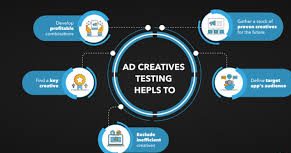
Understanding how to test ad creatives is vital for any marketer. It involves systematically comparing different versions of your ads to see which ones perform best with your target audience. This process helps you improve engagement, conversions, and overall return on investment by focusing on what truly resonates.
What Is Ad Creative Testing?
Ad creative testing is all about finding out what works. It’s not just a shot in the dark. It’s a smart way to learn about your audience.
You show them different ad versions. Then, you watch which ones they like the most. This helps you understand their tastes and what grabs their attention.
Think of it like trying on clothes before buying. You wouldn’t buy the first shirt you see, right? You’d try a few on.
You’d check the fit. You’d see how they look. Ad creative testing is the same idea for your ads.
You test different looks and messages before you spend a lot of money.
Why Testing Ad Creatives Matters
Testing ad creatives is super important. It helps you avoid wasting money. It also helps you get better results.
When you test, you learn what your audience really wants. This means your ads will connect with them better.
Imagine running an ad with a bright red button that says “Buy Now.” But maybe your audience responds better to a softer blue button that says “Learn More.” If you don’t test, you’ll never know. Testing saves you money by showing you what works best. It helps you focus your budget on ads that bring in more customers.
It also makes your marketing much smarter. You stop guessing. You start knowing.
This leads to more sales and happier customers. It’s the best way to make sure your marketing dollars are working hard for you. Better ads mean more clicks, more leads, and more sales.
That’s why testing is a must-do.
My Own Ad Testing Journey
I remember one time, I was working on a campaign for a new online course. I had this idea for an ad. It had a big, bold headline and a picture of a graduation cap.
I felt really good about it. I thought it was perfect. I launched the ad campaign with high hopes, expecting a flood of sign-ups.
But the results were…meh. Very few people clicked. Even fewer signed up.
I was so confused. The headline seemed clear. The image was relevant.
What was I missing? I felt a knot of worry in my stomach. All that effort felt wasted.
So, I decided to try something different. I went back to the drawing board. I created a second ad.
This one had a softer headline. It focused on the problem the course solved, not just the outcome. The image was a person looking thoughtful, not triumphant.
It felt less direct, almost a little vulnerable. I set up a simple A/B test. Version A was my original ad.
Version B was the new one.
Within a few days, it was clear. Version B was crushing Version A. The click-through rate was almost double.
The conversion rate was significantly higher. It turned out my audience didn’t want a direct “you’ll graduate!” message upfront. They wanted to know that I understood their struggles first.
That lesson was huge for me. It showed me that intuition is good, but data is king.
Ad Creative Testing Basics
What to Test: You can test almost anything! This includes headlines, images, videos, calls to action (CTAs), ad copy, colors, and even the overall message.
Why Test: To find out which ad elements perform best. This leads to more engagement and better results for less money.
When to Test: Always! Test when you launch new ads, and keep testing as you go. Things change, and so do audience preferences.
What Makes a Good Ad Creative?
A good ad creative is like a good handshake. It’s confident, clear, and memorable. It needs to grab attention fast.
People scroll quickly online. Your ad has only a few seconds to make an impact. It must stand out from everything else.
The message should be easy to understand. No one wants to work hard to get your point. It needs to speak directly to the person seeing it.
What problem do they have? How does your product or service fix it? The ad should answer this quickly.
Visuals are also key. A blurry photo or a confusing graphic won’t work. Use clear images or videos.
They should be high quality. They should match your brand’s look. The colors and fonts matter too.
They should be easy on the eyes and readable.
Finally, a strong call to action is vital. What do you want people to do next? “Click Here,” “Shop Now,” “Learn More,” or “Sign Up Today.” It should be clear and direct.
It should tell people exactly what to expect when they click.
Common Elements of Ad Creatives to Test
There are many parts of an ad that you can test. Each one can make a big difference. Let’s break down the main ones:
Headlines: This is the first thing people read. A good headline sparks curiosity or states a clear benefit. Testing different headlines helps you see what grabs attention best.
Short, punchy headlines often do well. Benefit-driven headlines are also strong.
Images and Videos: Visuals are powerful. They can tell a story without words. Test different types of images or videos.
Do people like photos of people? Or do they prefer product shots? Does a short video work better than a static image?
High-quality, relevant visuals are a must.
Ad Copy: This is the main text of your ad. It explains your offer. It highlights benefits.
It builds trust. Test different lengths and tones. Some audiences like short, direct copy.
Others prefer more detail and storytelling.
Calls to Action (CTAs): This tells people what to do. “Buy Now” is different from “Download Free Guide.” Test different wording and button colors. The CTA needs to be clear and compelling.
It should match what the user will get when they click.
Offers and Promotions: What are you giving people? A discount? A free trial?
A special bonus? Test different offers to see what motivates people most. Sometimes a percentage off works best.
Other times, a fixed dollar amount off is better.
Targeting Parameters: While not part of the creative itself, who you show the ad to is crucial. Testing different audience segments is a form of creative testing. What works for one group might not work for another.
Types of Ad Creatives You Can Test
Static Image Ads: Simple, classic ads with one image and text. Great for testing visual appeal and direct messages.
Video Ads: Engaging and can tell a story. Test different video lengths, styles, and scripts.
Carousel Ads: Showcase multiple images or videos in one ad. Good for telling a sequential story or showing product variety.
Interactive Ads: Ads that allow users to engage, like polls or quizzes. Can boost engagement.
Setting Up Your Ad Tests
Getting ready for ad testing might seem tricky. But it’s really about being organized. Start with a clear goal.
What do you want to improve? More clicks? More sales?
Less cost per sale?
Then, pick what you want to test. Don’t try to test everything at once. That’s a recipe for confusion.
Pick one element. Maybe you want to test two different headlines. Or a photo versus a video.
This is called an A/B test. You test version A against version B.
Make sure your test is fair. Your audience should be similar for both ads. Your budget should be the same.
The ad platform should show them randomly. This way, you know the difference is really about the ad creative.
Keep good records. Write down what you tested. Note the results.
This helps you learn over time. It builds a history of what works for your business. Be patient.
Sometimes it takes time to get enough data to be sure.
The Different Types of Ad Testing Methods
There are a few common ways to test your ads. Each has its own strengths. Knowing them helps you pick the right one for your needs.
A/B Testing (Split Testing)
This is the most common method. It’s simple and effective. You create two versions of an ad.
Let’s call them Ad A and Ad B. They are identical except for one thing. For example, Ad A has headline 1, and Ad B has headline 2.
You show both ads to similar groups of people at the same time. The ad platform handles this. It splits your audience.
It randomly shows Ad A to one group and Ad B to another. Then, you look at the results. Which ad got more clicks?
Which one led to more sales? The one that performs better is the winner.
A/B testing is great for isolating one change. It makes it easy to see what caused the difference. It’s a must-have for any serious marketer.
It’s like a science experiment for your ads.
Multivariate Testing (MVT)
This is like A/B testing but on a bigger scale. Instead of testing just one change, you test multiple changes at once. For example, you might test two headlines, two images, and two calls to action all at the same time.
The ad platform will create many different combinations. It might test headline 1 with image A and CTA X. Then it tests headline 1 with image B and CTA Y.
This can get complex quickly. You end up with many variations to test.
MVT is powerful. It can show you how different elements work together. It might reveal that headline 1 works best with image B, but headline 2 works best with image A.
This gives you deeper insights. However, it requires more traffic and more time to get reliable results. It’s often used for high-volume campaigns.
Bandit Testing (Multi-Armed Bandit)
This is a smarter, more dynamic way to test. Imagine you have several ad variations running. Bandit testing works by giving more traffic to the variations that are performing best.
It’s not a fixed split like A/B testing.
The system learns as it goes. If Ad C starts getting more clicks, it will show Ad C more often. It will show the weaker ads less often.
This means you spend less money on ads that aren’t working. You maximize your budget by focusing on the winners.
This method is great for when you need quick results. It’s also good if you have limited traffic. It helps you find winners faster.
Many modern ad platforms have built-in bandit testing features.
Usability Testing
This method focuses on how easy your ad is to understand and interact with. It’s less about numbers and more about direct feedback from real people. You might show your ad to a small group of your target audience.
You ask them questions. “What do you think this ad is about?” “What would you do next?” “Is anything confusing?” Their answers give you honest feedback. They can point out problems you never saw.
Usability testing is very hands-on. It can uncover issues with clarity, messaging, or even cultural relevance. It’s a good way to catch problems before you spend a lot on a campaign.
Quick Scan: Ad Testing Methods
| Method | What it Tests | Best For | Pros | Cons |
|---|---|---|---|---|
| A/B Testing | One change at a time | Simple, clear results | Easy to understand, isolates variables | Needs enough traffic, can be slow |
| Multivariate Testing | Multiple changes at once | Complex interactions | Deep insights, finds optimal combos | Needs high traffic, complex setup |
| Bandit Testing | Winning variations | Fast results, budget efficiency | Maximizes spend, adapts quickly | Can be less precise initially |
| Usability Testing | Clarity and user experience | Early feedback, problem identification | Identifies usability issues, direct feedback | Small sample size, subjective |
What Metrics Should You Track?
When you test ads, you need to know what to look for. The numbers tell the story. Don’t just look at one number.
Look at a few key metrics.
Click-Through Rate (CTR): This shows how many people clicked your ad after seeing it. A higher CTR means your ad is interesting. It makes people want to know more.
It’s calculated as (Clicks / Impressions) x 100.
Conversion Rate: This is super important. It shows how many people who clicked your ad actually completed your desired action. This could be buying something, signing up for a newsletter, or filling out a form.
A good conversion rate means your ad is not just getting clicks, but quality clicks.
Cost Per Click (CPC): How much do you pay for each click? If your CPC is too high, your ad might be too expensive. Testing can help you find creatives that lower your CPC.
Cost Per Acquisition (CPA) or Cost Per Conversion: This is how much it costs you to get one customer or lead. This is often the most important metric. You want your CPA to be as low as possible while still being profitable.
Better ads usually lead to a lower CPA.
Return on Ad Spend (ROAS): This tells you how much money you make for every dollar you spend on ads. If your ROAS is 5:1, you make $5 for every $1 spent. Testing creatives helps increase this number.
Engagement Rate: For social media ads, this shows how many people interacted with your ad (likes, shares, comments). High engagement can mean your ad is relevant and interesting.
View-Through Rate (VTR): For video ads, this shows how many people watched your video to completion. A high VTR means your video is engaging.
Real-World Scenarios for Ad Testing
Let’s see how testing plays out in different situations. Understanding these examples can help you apply the ideas to your own work.
E-commerce Product Ads
Imagine you sell handmade candles online. You’re running ads on Facebook and Instagram. You have a product photo ad.
Scenario: You want to test if a lifestyle image (candle burning in a cozy room) performs better than a clean product shot (candle on a white background).
Test: You create two ads. Ad A has the product shot. Ad B has the lifestyle image.
Both use the same headline, ad copy, and CTA (“Shop Now”).
Results to Track: CTR, Add-to-Cart rate, Conversion Rate, ROAS.
Possible Outcome: The lifestyle image might get more clicks because it shows the candle in use, creating an emotional connection. But the product shot might convert better if people need to see exact details. You’d learn which approach serves your goal best.
SaaS Software Promotion
You’re promoting a new project management tool. Your ads are on LinkedIn and Google Search.
Scenario: You’re testing two different headlines. Headline 1: “Boost Team Productivity.” Headline 2: “Manage Projects Effortlessly.”
Test: You create two ads for Google Search. Both have the same description and link. Ad A uses Headline 1.
Ad B uses Headline 2.
Results to Track: CTR, CPC, Conversion Rate (e.g., free trial sign-ups), CPA.
Possible Outcome: If your audience is focused on efficiency, “Boost Team Productivity” might get more clicks. If they are overwhelmed, “Manage Projects Effortlessly” might resonate more and lead to better conversions. This test helps you refine your core message.
Local Service Advertising
You own a local bakery and want to promote your custom cakes. Ads run on local news websites and Facebook.
Scenario: You want to see if a special offer (10% off your first custom cake order) works better than showcasing customer testimonials.
Test: You create two Facebook ads. Ad A highlights the 10% discount with a beautiful cake image. Ad B features a glowing customer quote with a cake image.
Results to Track: CTR, Lead Generation Rate (e.g., quote requests), CPA for new customers.
Possible Outcome: The discount might drive more immediate interest and leads. Testimonials could build more trust and lead to higher-quality leads who are more likely to order. You learn whether price or social proof is a stronger motivator for your local customers.
Scenario Spotlight: E-commerce Visuals
Goal: Increase sales for a new clothing line.
What to Test: Image styles: 1. Studio shot with model. 2.
Flat lay of the garment. 3. Lifestyle shot showing the garment in use.
Key Metrics: CTR, Add-to-Cart, Conversion Rate, ROAS.
Hypothesis: Lifestyle shots might create aspirational appeal, leading to higher engagement, while studio shots might provide clearer product details for conversion.
When Is an Ad Creative “Good Enough”?
This is a question many marketers ask. The truth is, “good enough” is a moving target. It depends on your goals and your audience.
But there are signs it’s time to move on from testing.
One key sign is when your winning creative is significantly outperforming others. If Ad B gets twice the conversions of Ad A, and the results are statistically significant, you’ve found a winner. You can then scale up that ad.
Another sign is when you’ve tested many variations and they all perform similarly. This might mean you’ve already found a highly effective creative. Or it might mean that the element you’re testing isn’t as important as you thought.
In this case, you could shift your focus to testing something else.
It’s also about patience. You need to give your tests enough time and data to be reliable. Don’t make decisions based on just a few clicks.
Look for trends that are consistent over a period of days or weeks. This ensures your results aren’t just random luck.
Finally, consider your budget. If you’re spending a lot of money testing, and the results aren’t yielding better performance, it might be time to use the best performing ad and reallocate resources. The goal is always improvement, not endless testing for its own sake.
Common Mistakes to Avoid in Ad Testing
Even with the best intentions, ad testing can go wrong. Knowing common pitfalls helps you steer clear of them.
Testing Too Many Things at Once: This is a big one. If you change the headline, image, and CTA all in one test, you won’t know which change made the difference. Always test one element at a time for clear results.
Not Enough Data: Making decisions based on tiny sample sizes is dangerous. You might think one ad is better, but it’s just a fluke. Wait until you have statistically significant data.
This means enough clicks and conversions to be sure.
Inconsistent Testing Conditions: Your ads need to run under similar circumstances. If Ad A runs during a holiday sale and Ad B doesn’t, the results are skewed. Keep budgets, targeting, and ad positions as consistent as possible.
Ignoring Audience Differences: What works for one audience might not work for another. If you’re testing broadly, ensure your results are broken down by different demographic groups or interests. Sometimes, different creatives are needed for different segments.
Stopping Tests Too Early: Sometimes, an ad needs time to gain momentum. Or maybe a particular ad performs better on certain days of the week. Give your tests adequate time to run.
Avoid pulling the plug too soon.
Not Documenting Results: If you don’t write down what you tested and what happened, you lose valuable learning. Keep a spreadsheet or a log. This is your ad testing history.
Mistake vs. Solution
Mistake: Testing multiple variables simultaneously.
Solution: Conduct A/B tests, changing only one element per test.
Mistake: Drawing conclusions from insufficient data.
Solution: Ensure statistical significance before declaring a winner.
Mistake: Inconsistent testing environments.
Solution: Maintain similar budgets, targeting, and campaign duration.
Best Practices for Effective Ad Creative Testing
To make your ad testing work hard for you, follow these proven methods.
Start with a Hypothesis: Don’t just test randomly. Before you create your ads, ask yourself: “What do I think will work better, and why?” Write it down. This gives your test direction.
Define Clear Goals: What do you want to achieve with this test? Is it more clicks, higher conversion rates, or lower costs? Knowing this helps you measure success.
Use High-Quality Visuals: Whether it’s an image or a video, it needs to be professional and relevant. Blurry or poorly lit visuals will hurt performance, no matter how good your message is.
Write Compelling Copy: Your words matter. Keep them clear, concise, and benefit-driven. Speak directly to your audience’s needs or desires.
Use active voice and simple language.
Have a Strong Call to Action: Make it obvious what you want people to do. Use action words. Ensure the CTA matches the landing page experience.
Test in a Live Environment: The best way to test is with real people on real ad platforms. This gives you genuine data. Make sure your test setup is correct within the platform.
Analyze Results Thoroughly: Don’t just look at the top-line numbers. Dig into the details. Understand why one ad performed better.
Look at audience demographics, device types, and times of day if possible.
Iterate and Improve: Testing isn’t a one-time thing. It’s a continuous process. Use what you learn from each test to inform your next one.
Always be looking for ways to optimize.
What This Means for You and Your Ads
Understanding how to test ad creatives is more than just a marketing tactic. It’s a fundamental shift in how you approach advertising. It means moving from hopeful guessing to data-driven decision-making.
For you, this translates to better results without the stress of constant uncertainty.
It means your marketing budget will work harder. You’ll spend less on ads that don’t perform and more on ads that bring in customers. This directly impacts your bottom line.
It helps your business grow more reliably.
It also means you’ll build a deeper connection with your audience. By testing, you learn what they truly respond to. You start speaking their language.
This leads to more trust and loyalty. Your brand becomes more relevant to their lives.
You’ll also become a more confident marketer. With each test, you gain knowledge and experience. You’ll develop an instinct for what works, backed by solid data.
This makes future campaigns easier and more successful. It’s about building expertise over time through practice.
Quick Fixes and Tips for Ad Testing
Here are some simple, actionable tips to boost your ad testing right away.
Use a Testing Framework: Before you launch, decide on your test. Write down your hypothesis, the element you’re testing, and your key metrics. This keeps you focused.
Leverage Ad Platform Tools: Most major ad platforms (Google Ads, Facebook Ads, etc.) have built-in A/B testing tools. Use them! They make the setup and tracking much easier.
Check Your Landing Page: Your ad creative is only half the story. Make sure your landing page matches the ad’s promise. If it doesn’t, even the best ad won’t convert.
Test on Different Devices: People use phones, tablets, and computers differently. See if your ads perform better on mobile versus desktop. You might need different creatives for each.
Consider Dayparting Tests: Does your ad perform better at certain times of day or days of the week? Testing these “time segments” can help optimize your ad delivery.
Keep a “Swipe File”: Save successful ads (yours or competitors’). This provides inspiration and a benchmark for what’s working in the market.
Frequently Asked Questions About Testing Ad Creatives
How many ads should I test at once?
It’s best to start by testing just two versions of an ad against each other (an A/B test). This isolates the change you’re making. Once you have a winner, you can then test that winner against a new variation.
Avoid testing too many variations simultaneously, as it can dilute your traffic and make it hard to get conclusive results.
How long should I run an ad test?
The duration depends on your ad budget and the volume of traffic you receive. Generally, you want to run tests until you have enough data for statistical significance. This could mean a few days for high-volume campaigns or a couple of weeks for lower-volume ones.
Avoid stopping a test too early, as results can fluctuate.
What if my ad tests show no significant difference?
This can happen! It might mean the element you tested isn’t as important as you thought, or that both versions are already performing very well. In this case, you can either declare a winner (often the one with a slight edge) or move on to test a different element of your ad that you believe has more potential for impact.
Can I test ad creatives for different ad platforms?
Yes, absolutely! The principles of ad creative testing apply across all platforms like Google Ads, Facebook Ads, Instagram Ads, LinkedIn Ads, and TikTok Ads. However, the specific testing tools and how you implement the tests might differ slightly from platform to platform.
Always use the native testing features where available.
When should I stop testing a creative and stick with it?
You should stick with a creative when it’s consistently delivering strong results and meeting or exceeding your campaign goals over a sustained period. If a winning creative is achieving a good ROAS and a low CPA, and further testing isn’t yielding significant improvements, it’s wise to scale that successful creative and focus your testing efforts elsewhere.
Is it better to test images or text first?
This often depends on your industry and audience. For visually driven products (like fashion or food), testing images or video first might be more impactful. For service-based businesses or complex products, testing headlines and ad copy first could yield better insights into what messaging resonates.
It’s often beneficial to test both, but consider which element you believe has the biggest potential to move the needle for your specific offering.
Conclusion
Testing your ad creatives is not an option; it’s a necessity for successful marketing. It’s your roadmap to understanding your audience better. It helps you spend your money wisely.
By consistently testing, analyzing, and learning, you’ll create ads that truly connect. This leads to better performance and real growth for your business.
