
You need to test enough ad creatives to find winners. Start with 2-3 variations for your main ad. Test different headlines, images, or calls to action. Then, add more based on what you learn. The goal is finding what best connects with your audience.
Understanding Ad Creative Testing
Ad creative testing is super important. It means trying out different versions of your ads. You want to see which ones do the best.
This is also called A/B testing. You might change a picture. You might change the words.
You might change the button color. The idea is to change just one thing at a time. This helps you know for sure what made the difference.
Why does this matter so much? Because what works for one group of people might not work for another. Our ads need to grab attention.
They need to make sense to people. They need to tell people what to do next. When you test, you learn what message clicks.
You learn what picture catches their eye. This helps you spend your money better. You don’t waste money on ads that don’t perform.
The number of creatives you test isn’t a magic number. It depends on a few things. It depends on your budget.
It depends on your goals. It also depends on how much time you have. But there’s a smart way to approach it.
You don’t need to test fifty different ads at once. That would be a lot to manage. And it would be hard to know which one was the real winner.
My First Creative Testing Oops
I remember when I first started. I was so excited to run ads for a new client. I had this one idea.
I thought my ad was perfect. I made one version. Then my boss said, “What else did you try?” I just looked at him.
I thought one good ad was enough. He explained that we needed to know if it was truly the best. He told me to make at least two more.
I was a bit annoyed. It felt like extra work. I stayed up late.
I made two more versions. One had a different picture. The other had a slightly changed headline.
We ran them. Guess what? The one I thought was perfect did okay.
But one of the others did way better. It was a big lesson for me. I learned that my first idea isn’t always the best one.
Testing is key.
Why Test Ad Creatives?
Grab Attention: The first ad someone sees might not be the most eye-catching. Testing helps find the hook.
Improve Messaging: Words matter a lot. Testing shows which message resonates most.
Boost Conversions: Better ads lead to more people taking action. This means more sales or leads.
Optimize Spending: Don’t waste ad money. Focus on what brings the best results.
Understand Your Audience: What they respond to tells you a lot about them.
How Many Creatives Should You Start With?
When you first start out, you don’t need to go crazy. Think about starting small. A good starting point is to have two to three ad creatives.
Why two or three? This is enough to get some valuable data. But it’s not so many that it becomes overwhelming.
Let’s say you’re promoting a new pair of running shoes. You have your main product image. That’s one creative.
Now, think about what else you can change. You could have a second creative that shows someone running in the shoes. It highlights the action.
You could have a third creative that focuses on a special feature. Maybe it’s the special sole. Or maybe it’s the lightweight material.
With these three, you can test different elements. You can test the main image versus the action shot. You can test the feature focus versus the lifestyle shot.
You can also test different headlines for each. For example:
- Headline 1: “Run Faster with Our New Shoes”
- Headline 2: “Lightweight Comfort for Every Mile”
- Headline 3: “The Ultimate Running Shoe is Here”
This approach gives you variation. It lets you gather real data. It helps you see which combination of image and text works best.
It’s a solid foundation. It’s where most smart marketers begin.
Elements You Can Test in Your Ad Creatives
When we talk about ad creatives, we mean the whole ad. But there are many parts to an ad. Each part can be tested.
Knowing this helps you decide what variations to make.
Images or Videos: This is often the first thing people see. A bright, clear image can stop someone scrolling. A video can tell a quick story.
You can test:
- Different photos of the same product.
- A photo versus a graphic.
- A static image versus a short video.
- Lifestyle shots versus product-only shots.
Headlines: The headline is crucial. It’s the first text people read. It needs to be clear and catchy.
You can test:
- Benefit-driven headlines (e.g., “Save Time”).
- Question headlines (e.g., “Need a Solution?”).
- Direct headlines (e.g., “Buy Now”).
- Urgency headlines (e.g., “Limited Time Offer”).
Ad Copy (Body Text): This is the main message. It explains more about your offer. You can test:
- Short and punchy copy versus longer, more detailed copy.
- Copy that focuses on features versus copy that focuses on benefits.
- Different tones of voice (e.g., formal, casual, enthusiastic).
Calls to Action (CTA): This tells people what to do. It’s often a button. You can test:
- “Shop Now” versus “Learn More”.
- “Sign Up” versus “Get Offer”.
- The color of the button.
Ad Formats: Different platforms offer different ad types. You can test:
- Image ads versus carousel ads.
- Story ads versus feed ads.
- Video ads versus collection ads.
The key is to test one element at a time. If you change the image and the headline in the same ad, you won’t know which change made the difference. This is called multivariate testing.
It’s more complex. For beginners, A/B testing (changing one thing) is better.
Quick Scan: What to Test
Scaling Up Your Ad Creative Testing
Once you have your initial two to three ad creatives running, you start watching the results. What do the numbers tell you? Are people clicking?
Are they buying? Are they signing up?
If one ad is clearly outperforming the others, that’s great! You’ve found a winner. Now, you can take that winning ad.
You can then test variations of it. For example, if your “action shot” image performed best with the headline “Run Faster,” you could now test:
- The “action shot” image with a new headline: “Feel the Speed.”
- The “action shot” image with a different CTA: “Get Yours Today.”
This is how you build on success. You use the data to guide your next steps. You don’t just guess anymore.
This iterative process is powerful. It leads to continuous improvement.
As your budget allows and your understanding grows, you can test more. You might increase to four to five creatives. This is especially true if you are targeting different audience segments.
Each segment might respond to different messages or visuals. For instance, a younger audience might like more energetic videos. An older audience might prefer clear, informative text.
Consider running different campaigns for different goals. One campaign might be for brand awareness. Another might be for direct sales.
The creatives that work for awareness might be different from those that drive sales.
Key idea: The number of creatives isn’t fixed. It grows with your knowledge. It grows with your campaign’s success.
It’s about smart, data-driven decisions. You’re not just throwing spaghetti at the wall. You’re refining your approach.
Real-World Context: Different Platforms, Different Needs
Where you run your ads makes a big difference. Each platform has its own style. It also has its own audience expectations.
Facebook and Instagram: These platforms are very visual. Images and videos are king. You might test different aspect ratios for images.
You can test short, attention-grabbing videos versus slightly longer ones that tell a story. Carousels are popular here too. You can test different products or features in each card of the carousel.
Google Search Ads: Here, the words are most important. People are actively searching for something. Your headlines and ad copy need to match their search terms.
You’ll test different keyword matches. You’ll also test different headlines that answer their search query directly. Text ads are the main format, so focus on compelling copy.
LinkedIn: This is a professional network. Ads here should be more formal and targeted. They often focus on business solutions, careers, or industry insights.
Testing different professional angles or value propositions is key. Videos can work, but they should be polished and relevant to a business audience.
TikTok: This platform is all about short, engaging video content. Trends change fast. Your creatives need to be native to the platform.
They should feel authentic and entertaining. Testing different video styles, music, and effects is essential. What’s popular one week might be old news the next.
So, while you might start with two to three creatives overall, you might need variations for each platform. A winning Facebook ad might flop on LinkedIn. This means understanding your platform is part of creative testing.
Platform Spotlight: Google vs. Social Media
Google Search:
- Focus: Matching search intent with clear text.
- Key Test Areas: Headlines, ad copy, keywords.
- Best Practice: Test 3-5 text ad variations per ad group.
Facebook/Instagram:
- Focus: Visually engaging content that stops the scroll.
- Key Test Areas: Images, videos, short copy, CTAs.
- Best Practice: Test 3-5 visual/copy combinations.
What Happens When You Don’t Test Enough?
I’ve seen businesses make this mistake. They fall in love with their first ad idea. They run it for weeks, or even months.
They think it’s just not working. They might blame the platform. Or they might blame the targeting.
But often, the real problem is the ad itself.
When you don’t test enough creatives, you miss out on:
- Better performance: You could be getting more clicks and sales with a different ad.
- Lower costs: Well-performing ads can lead to lower cost per click or conversion.
- Deeper audience insights: You learn what truly speaks to your potential customers.
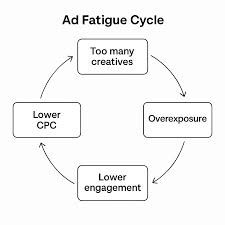
- Avoiding ad fatigue: Running the same ad over and over makes people stop noticing it.
I remember a bakery that did this. They had a lovely picture of a cake. They ran the same ad for months.
They were confused why sales weren’t picking up. We tested new ads. One ad showed someone enjoying a slice of cake.
Another showed the ingredients. We tested different headlines. Suddenly, their sales picked up!
The original cake picture was nice, but it didn’t connect as well as showing the joy of eating it.
Not testing enough is like flying blind. You’re spending money without a clear direction. You’re hoping for the best instead of working towards it.
What This Means For Your Campaigns
So, how many ad creatives should you test? It’s not a single, fixed number. It’s a strategic process.
Start Smart: For any new campaign or significant change, begin with 2-3 distinct ad creatives. Focus on testing a key element, like the main visual or the primary headline.
Analyze and Iterate: Watch your data closely. Identify which creative is performing best. Then, use that winning creative as a base.
Test variations of that specific element or other elements.
Scale Based on Success: As you gain insights and your budget allows, you can increase the number of creatives you test. Aiming for 4-6 creatives in a well-established campaign can uncover further optimizations.
Consider Audience and Platform: Different audiences and platforms may require different sets of creatives. What works on Instagram might need a different approach on Google Search. Sometimes, you need a completely separate set of tests for each.
The Goal: Not More, But Better: The aim isn’t just to have more ads. It’s to find the most effective ads. You want ads that connect, convert, and are cost-efficient.
Quality of testing matters more than sheer quantity.
Think of it like this: You’re a detective. Each ad creative is a clue. You want to find the one that solves the case – the case of getting your message to the right people, at the right time, with the best possible result.
Your Testing Roadmap
Phase 1: Launch (2-3 Creatives)
- Test one core element (image, headline).
- Focus on clear differentiators.
Phase 2: Optimize (4-6 Creatives)
- Build on winning creatives.
- Test new elements or combinations.
Phase 3: Refine (7+ Creatives, as needed)
- Test variations for specific segments/platforms.
- Address ad fatigue with fresh concepts.
Quick Fixes & Tips for Creative Testing
Here are some simple things you can do right away:
- Keep it Simple: Don’t try to test too many things at once. Start with the most important element.
- Use Clear Assets: Make sure your images and videos are high quality. Blurry or pixelated visuals look unprofessional.
- Write Strong Headlines: Spend time crafting compelling headlines. They are often the first thing people read.
- Have a Clear CTA: Tell people exactly what you want them to do. Make your call to action obvious.
- Watch Your Data: Check your ad performance regularly. Look for patterns.
- Don’t Be Afraid to Pause: If an ad is performing very poorly, pause it. Focus your budget on the winners.
- Refresh Periodically: Even winning ads can get old. Plan to refresh your creatives every few months to avoid ad fatigue.
Frequent Questions About Ad Creative Testing
How many ad creatives should I use for a brand new campaign?
For a brand new campaign, it’s best to start with 2 to 3 ad creatives. This allows you to test a key element, like the main image or the headline, without being overwhelmed by data. You can then build on the performance of these initial creatives.
Is it better to test many creatives at once or fewer over time?
It’s generally better to test fewer creatives at a time, focusing on one main change per test (A/B testing). This gives you clear insights into what works. Testing many creatives at once (multivariate testing) can be complex and make it hard to pinpoint the exact reason for success or failure.
How often should I refresh my ad creatives?
You should plan to refresh your ad creatives every few months, or sooner if you notice performance declining. This helps prevent “ad fatigue,” where people stop noticing or responding to ads they’ve seen too many times. Even winning ads can benefit from an update.
Can I use the same ad creatives across different platforms like Facebook and Google?
While you can start with similar concepts, it’s usually best to adapt your creatives for each platform. Facebook and Instagram are visual, while Google Search relies on text. What works well on one might not perform on the other.
Test tailored versions for each platform.
What is considered a “winning” ad creative?
A “winning” ad creative is one that significantly outperforms other variations based on your campaign goals. This could mean a higher click-through rate (CTR), a lower cost per conversion, more leads, or greater engagement. The specific metric depends on what you’re trying to achieve.
How many variations of a single element (like a headline) should I test?
When testing a single element, such as headlines, aim for 2 to 3 variations to start. For example, test your original headline against two new ones. This provides enough data to see which message resonates best without creating too much complexity.
Conclusion: Your Path to Better Ads
Figuring out how many ad creatives to test is a journey. It’s about smart steps, not huge leaps. Start with a few key variations.
Watch what the data tells you. Build on your successes. Always keep your audience and your platform in mind.
By testing wisely, you can create ads that truly connect and drive results.
